
How One Auckland Cafe Went from Invisible to Fully Booked with Local SEO

The cafe had been open for eleven months. It sat on a side street in Ponsonby, tucked between a yoga studio and a vintage clothing shop. The coffee was excellent — a house blend roasted in Kingsland, single-origin options rotating weekly. The cabinet food was made fresh every morning. The owner, a former hospitality manager who'd saved for three years to open her own place, had done everything she thought she was supposed to do.
She'd built an Instagram following. She'd printed flyers for the neighbours. She'd even hosted a soft launch with a local food blogger. But by month eleven, weekday mornings were empty. Weekends were unpredictable. She was burning through her savings faster than new customers were walking through the door.
The problem wasn't the product. The problem was that when someone standing two hundred metres away typed "cafe near me" into their phone, her business didn't exist. Not on page two. Not on page five. Not anywhere. Google didn't know she was there.
This is the story of how that changed — and what it reveals about how local SEO actually works for small businesses in New Zealand.
Wondering if your business has the same invisible problem? We'll check your local search visibility for free — no strings, just a clear picture of where you stand.
The Diagnosis Nobody Wants to Hear
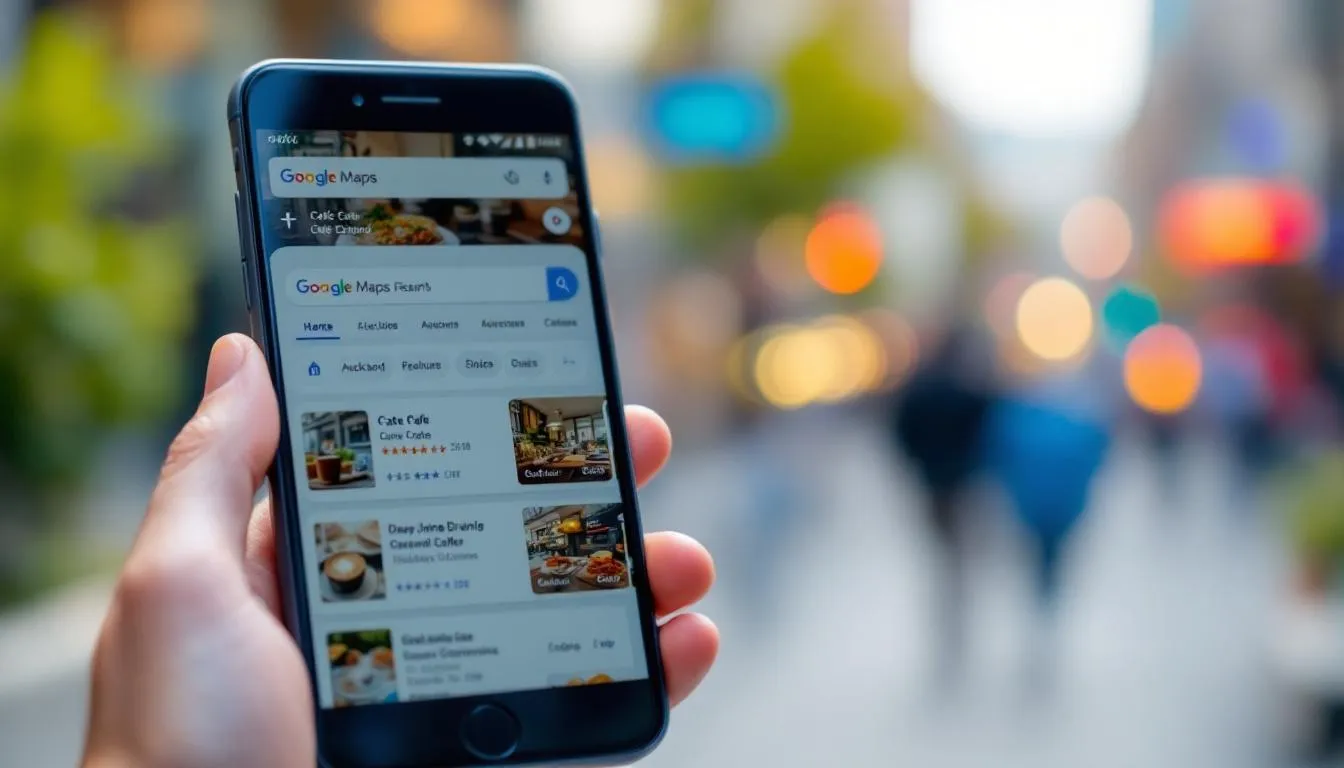
When we first looked at her Google Business Profile, the reason for the invisibility was obvious. The profile existed — she'd claimed it during the fitout — but it was essentially abandoned. No business hours listed. One photo from eight months ago. Zero reviews. The primary category was set to "restaurant" instead of "cafe." The business description was a single sentence.
Google's local algorithm works on proximity, relevance, and prominence. She had proximity — the cafe was physically there. But she had almost zero relevance (Google couldn't confidently match her to "cafe" searches) and zero prominence (no reviews, no activity, no web presence beyond a dormant Instagram account).
The hard truth is that most NZ small businesses are in a similar position. They've claimed a Google Business Profile at some point, maybe added a phone number, and then never touched it again. In Google's eyes, an inactive profile with no reviews is indistinguishable from a closed business.
A Google Business Profile is not a "set it and forget it" listing. It's a living channel that Google monitors for activity, freshness, and customer engagement. Treat it like a dormant social account and Google will treat your business like it doesn't exist.
What Changed in the First Four Weeks
The work wasn't glamorous. There was no secret hack, no paid shortcut, no algorithm trick. It was methodical, unsexy, and effective.
Week one was about fixing the foundation. The business category was corrected to "cafe" with secondary categories for "espresso bar" and "breakfast restaurant." Business hours were added for every day, including public holidays. The business description was rewritten with natural mentions of the neighbourhood, the type of food, and the coffee offering. Ten new photos were uploaded — exterior, interior, coffee, cabinet food, the team.
Week two focused on reviews. The owner started asking regulars — the ones who came back every week — if they'd mind leaving a Google review. She didn't offer incentives. She didn't game the system. She just asked. Within two weeks, she had twelve genuine reviews, all five stars, most of them mentioning specific things they loved.
Week three introduced Google Posts — short updates about weekly specials, new menu items, seasonal drinks. Each post included a photo and a link back to the website. This told Google the business was active and gave it fresh content to index.
By week four, she appeared in the local map pack for the first time — position three for "cafe Ponsonby." Not the top spot, but visible. After eleven months of invisibility, customers could finally find her.

The Snowball That Followed
What happened next illustrates why local SEO compounds in a way that paid advertising doesn't. Each new review strengthened the profile. Each customer who found the cafe through Google Maps and had a good experience was another potential reviewer. The cycle fed itself.
By month two, the profile had twenty-eight reviews. She was ranking in the top three for "cafe near me" across most of Ponsonby and Grey Lynn. Walk-in traffic on weekdays had increased noticeably — not dramatically, but consistently. Two or three new faces every morning who'd specifically say they found the place on Google.
By month three, something unexpected happened. A food writer for a local publication found the cafe through a Google search, visited twice, and wrote a short review. That review generated a backlink to the website, which strengthened the domain authority, which pushed the local rankings even higher.
By month six, weekend mornings were fully booked by midday. The weekday breakfast rush was consistent. She'd hired an additional staff member. The Google Business Profile had fifty-three reviews, was ranking number one for "cafe Ponsonby" and top three for broader terms like "best coffee Ponsonby" and "breakfast Auckland."
The total investment in local SEO over those six months was less than what she'd spent on Instagram ads in the first two months of opening — ads that had generated precisely zero trackable walk-ins.
Local SEO doesn't just bring customers today. It builds a compounding asset. Every review, every photo, every interaction makes the next customer easier to reach. Paid ads stop the moment you stop paying. A strong Google Business Profile keeps working while you sleep.
Why This Story Matters Beyond Cafes
The cafe story is specific, but the pattern repeats across every local service business in New Zealand. We've seen the same trajectory with plumbers in Hamilton, dentists in Wellington, real estate agents in Christchurch, and auto mechanics in Tauranga. The industry changes. The mechanics of local SEO don't.
Every NZ business that relies on local customers — people searching within a specific area for a specific service — is competing in the same local search ecosystem. Google Maps is the new Yellow Pages, except most businesses haven't bothered to fill in their listing properly.
The businesses that take local SEO seriously don't need to be the best in their industry. They need to be the most visible. A good plumber with fifty reviews and a complete Google profile will get the call over a great plumber with no online presence. That's not fair, but it's how the market works in a mobile-first world where most people never scroll past the map pack.
The data backs this up. According to Google's own research, businesses with complete profiles are twice as likely to be considered reputable by searchers, and searches containing "near me" have grown consistently year over year. For NZ small businesses, this isn't a nice-to-have — it's the primary discovery channel.
The Three Things That Actually Move the Needle
After working with dozens of NZ local businesses, the pattern is clear. Three things determine whether you show up in local search results, and they're the same three things most businesses neglect.
The first is profile completeness and accuracy. This sounds basic because it is. But "basic" doesn't mean "done." Your business name, address, phone number, hours, categories, description, and photos all need to be correct, complete, and consistent with what appears on your website and other directories. Google cross-references this information constantly. A mismatch between your website address and your Google profile address is enough to suppress your visibility.
The second is reviews — both volume and velocity. A business with fifty reviews that received its last one six months ago looks stale. A business with thirty reviews that gets two new ones every week looks alive. Google weighs recency heavily. The best approach is simple: ask every satisfied customer. Build it into your process. A card at the counter, a follow-up text, a line at the bottom of your invoice. Make it easy and make it habitual.
The third is website content that supports your local presence. Your Google Business Profile tells Google where you are and what category you're in. Your website tells Google what you actually do and why you're relevant for specific searches. A plumber with a website that has dedicated pages for each service — hot water cylinders, blocked drains, bathroom renovations — signals expertise that a bare-bones profile can't convey. Add location-specific content and you're giving Google everything it needs to rank you.
What Happens When You Don't Do This
The alternative is what most NZ small businesses experience: slow decline in visibility, increasing dependence on paid channels, and a vague sense that "Google doesn't work for businesses like mine."
Google does work. It works extremely well for local businesses. But it works for the businesses that invest in showing up. The ones that treat their Google profile as a living marketing channel, not a dusty directory listing from a decade ago.
We audited a Wellington-based tradesperson last year who was spending over four thousand dollars a month on Google Ads while his Google Business Profile had three reviews, no photos, and the wrong business hours. He was paying for visibility that he could have earned — and paying a premium because his organic presence was so weak that ads were his only option.
That's the hidden cost of neglecting local SEO. It doesn't just mean you're missing organic traffic. It means every other channel becomes more expensive because you have no foundation to build on.
Neglecting local SEO doesn't just cost you organic traffic. It makes every other marketing channel more expensive. Without a foundation of reviews, content, and profile authority, you're paying a premium for visibility that your competitors are earning for free.
Where to Start If This Sounds Like Your Business
If you've read this far and recognised your own situation — incomplete profile, few reviews, a website that hasn't been touched in years — the good news is that the gap is fixable. Local SEO isn't rocket science. It's consistent, intentional work applied to the channels that matter.
Start with your Google Business Profile. Log in, complete every field, upload fresh photos, and make sure your information matches your website exactly. Then ask five customers for a review this week. Just five. Do the same next week. And the week after that. Within a month, you'll have more reviews than most of your competitors.
If your website needs work — or if you don't have one at all — that's the next priority. It doesn't need to be expensive or complicated. It needs to clearly describe what you do, where you do it, and how to get in touch. A technical guide to local SEO setup can walk you through the specifics.
And if you'd rather have someone handle the whole thing so you can focus on running your business — that's what we do. We've helped NZ businesses across every industry turn their local search presence from invisible to dominant. The cafe owner we started with? She's now opening a second location. Google Maps is still her number one source of new customers.
Not sure where you stand in local search? Drop us a line — we'll pull your local SEO data and show you exactly where the opportunities are. No jargon, no pressure, just clarity.
Frequently Asked Questions
How long does local SEO take to show results in New Zealand?
Most NZ businesses see measurable improvements in Google Maps visibility within four to eight weeks of consistent local SEO work. Ranking in the local three-pack for competitive terms typically takes three to six months. The timeline depends on your starting point, competition level, and how consistently you maintain your profile.
What is the most important factor for local SEO in NZ?
Google Business Profile completeness and accuracy is the single biggest factor. This includes correct NAP (name, address, phone), business hours, categories, photos, and regular posts. Reviews are a close second — both quantity and recency matter.
Do I need a website for local SEO to work?
You can rank in Google Maps without a website, but having one significantly strengthens your local SEO. Google uses your website content to understand what your business does and which searches you're relevant for.
How much does local SEO cost for a small business in NZ?
Local SEO for a small NZ business typically costs $500-$2,000 per month. This covers Google Business Profile management, review generation, citation building, and local content creation. Some businesses start with a one-off setup ($1,000-$3,000) and manage ongoing work themselves.
Can I do local SEO myself or do I need an agency?
You can handle basic local SEO yourself — claiming your Google Business Profile, asking for reviews, and keeping information consistent. Technical aspects like schema markup, citation auditing, and content strategy typically benefit from professional help. Many NZ small businesses start DIY and bring in an agency when they plateau.