
GEO vs SEO 2026: A Plain-English Introduction to AI Search
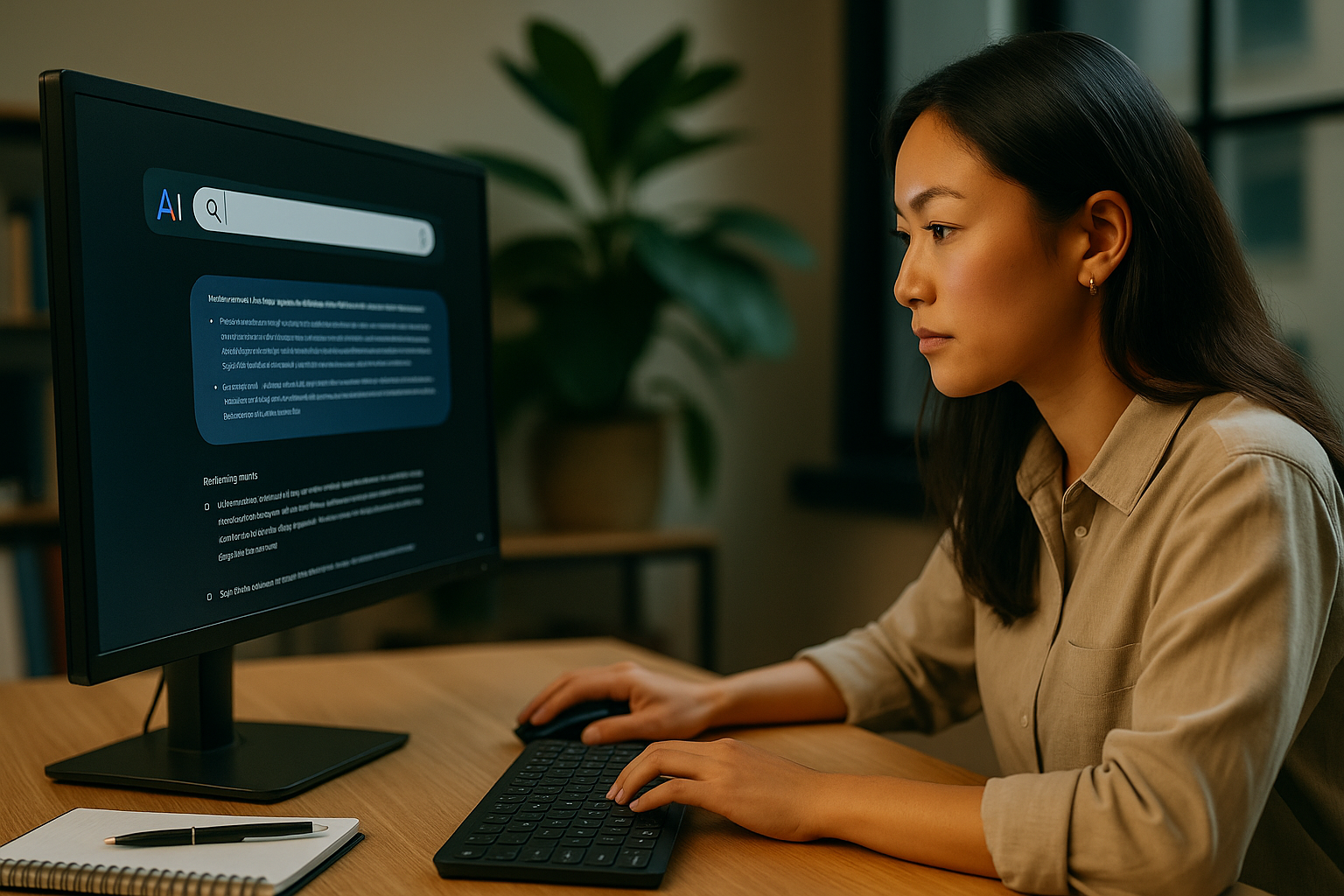
The short answer: SEO gets your pages ranked in a list of links, while GEO gets your brand cited inside AI-generated answers on ChatGPT, Perplexity, and Google AI Overviews. In 2026 you need both, because a growing share of searches never reaches the classic results page.
The world of search is changing fast in 2026. If you're used to doing SEO the traditional way, it's time to look up and meet its new sibling: GEO, or Generative Engine Optimization. This is the plain-English introduction — for the full strategic NZ guide with budget breakdowns and Auckland/Wellington/Christchurch playbooks, head to our flagship SEO vs GEO 2026: NZ Complete Guide.
So what exactly is GEO? And how is it different from SEO in 2026? Let's get into it.
What Is GEO?
GEO stands for Generative Engine Optimization. It's the practice of making sure your brand or content shows up in AI-powered search experiences like ChatGPT, Google AI Overviews, Perplexity, Claude, and Gemini.
In the past, when someone searched for something, SEO helped your page appear in a list of links. With AI search, users don't get a list — they get a direct answer. That's where GEO comes in. Instead of optimising just for rankings, you now optimise for visibility within AI-generated responses.
For the technical definition and 2026 NZ data on AI search penetration, see What Is Generative Engine Optimization and Why It Matters in 2026.
Why Should You Care in 2026?
AI isn't a trend anymore — it's how a growing share of New Zealand consumers and B2B buyers find information.
Remember when Google removed keyword data in 2011? That shook the SEO world. Now, with generative AI, we're in a similar shake-up — but bigger. Tools like ChatGPT, Google AI Mode, Perplexity, and Gemini are changing how answers are delivered, and that affects how your content gets found.
If you ignore GEO, you risk disappearing from the new search results. If you adapt, you'll stay ahead while others scramble. In 2026, fewer than 5% of NZ businesses are actively optimising for AI search — the early-mover window is still open.
GEO vs SEO: What's the Difference?
Here's a quick breakdown:
| SEO | GEO | |
|---|---|---|
| Goal | Rank content in search results | Show up in AI-generated answers |
| User Journey | One keyword, one answer | Multi-step conversation with predictive flow |
| Traffic | More volume, less targeted | Less volume, more qualified |
| CTR | 8.5% on average (up to 40% for #1 spot) | Often <1% from chatbot environments, but higher influence on brand recall |
| Measurement | Well-established (GSC, GA4) | Still evolving — focus on pipeline, brand search lift, AI citation tracking |
| NZ competition (2026) | Saturated in Auckland service categories | Wide open — early mover advantage in most industries |
In short: SEO is about being found. GEO is about being chosen as the answer.
For the full SEO vs GEO comparison with NZ budget figures and decision framework, read our SEO vs GEO 2026 NZ flagship guide.
Does This Mean SEO Is Dead in 2026?
Not at all.
Despite the buzz around AI search, Google is still the dominant channel. Google processes 8.5 billion searches per day; ChatGPT processes ~150 million. AI is growing fast, but it's additive — it's a new channel, not a replacement.
Think of GEO as an add-on, not a replacement. You still need to show up on Google, but now you also need to show up inside AI-generated answers. It's a broader game — and you've got to play both fields.
For the strategic question of whether SEO is still enough on its own, see Is SEO Still Enough in the Age of AI Search?
How Do You Optimise for GEO in 2026?
Here's what's working now:
- Focus on topical authority: become the go-to source in your niche by publishing multiple in-depth pieces, not scattered one-offs
- Answer questions clearly: AI pulls from content that's straightforward, helpful, and structured with answer-first paragraphs
- Include branded content: LLMs recognise brand mentions and trust strong, consistently-named brands across the web
- Structure your content well: use headings, bullets, FAQ schema, and short paragraphs that AI models can extract cleanly
- Track branded search volume: rising brand searches mean you're showing up in AI answers even when you can't measure citations directly
- Maintain freshness: AI weights recent timestamps heavily. Update key pages quarterly with 2026 data points
Also, start measuring share of voice inside LLMs. You won't always get referral traffic, but your brand can generate awareness behind the scenes. For the full step-by-step playbook, see How to Get Your Brand Recommended by AI.
The Real Shift: From Results to Answers
Here's the bottom line: traditional search gives people results. AI search gives them answers.
That means users may not even visit your website — but they'll still see your brand. Your goal is to make sure that when AI looks for an answer in your category, you're part of it.
Done right, GEO can help you reach NZ buyers earlier in their journey and influence their decisions — even if they never click a link.
And if you want a specialist to do the heavy lifting, our AI search optimization service is built for exactly this.
The 2026 GEO Cluster (Recommended Reading)
If this introduction made the picture clearer, here's where to go next:
- Flagship: SEO vs GEO 2026: NZ Complete Guide for Auckland Businesses
- Definition: What Is GEO and Why It Matters in 2026
- Playbook: How to Get Your Brand Recommended by AI
- AIO readiness: Google's AI Search — Is Your Website Ready?
- Strategic question: Is SEO Still Enough in the Age of AI Search?
Ready for the AI Search Era?
Whether you're already doing SEO or just starting, it's time to expand your strategy. Don't just rank — be the answer.
At HornTech, we help businesses across New Zealand stay visible in both traditional and AI-powered search. From technical SEO to GEO-ready content, our team keeps you ahead of the curve. Learn more about our integrated SEO + GEO services.
Want help preparing your brand for the future of search? Let's talk.
Last updated: May 2026 | HornTech Digital Marketing